
Mold removal service
Mold Removal in Jackson, MS
Call (769) 235-0088 for mold removal in Jackson, MS. We find where the mold is growing, contain the area, remove it and dry the space.
Mold removal works only when the moisture source is fixed. Without that, the mold comes back. Our visit covers both the growth and the cause.
Emergency availability for Jackson, MS and nearby cities
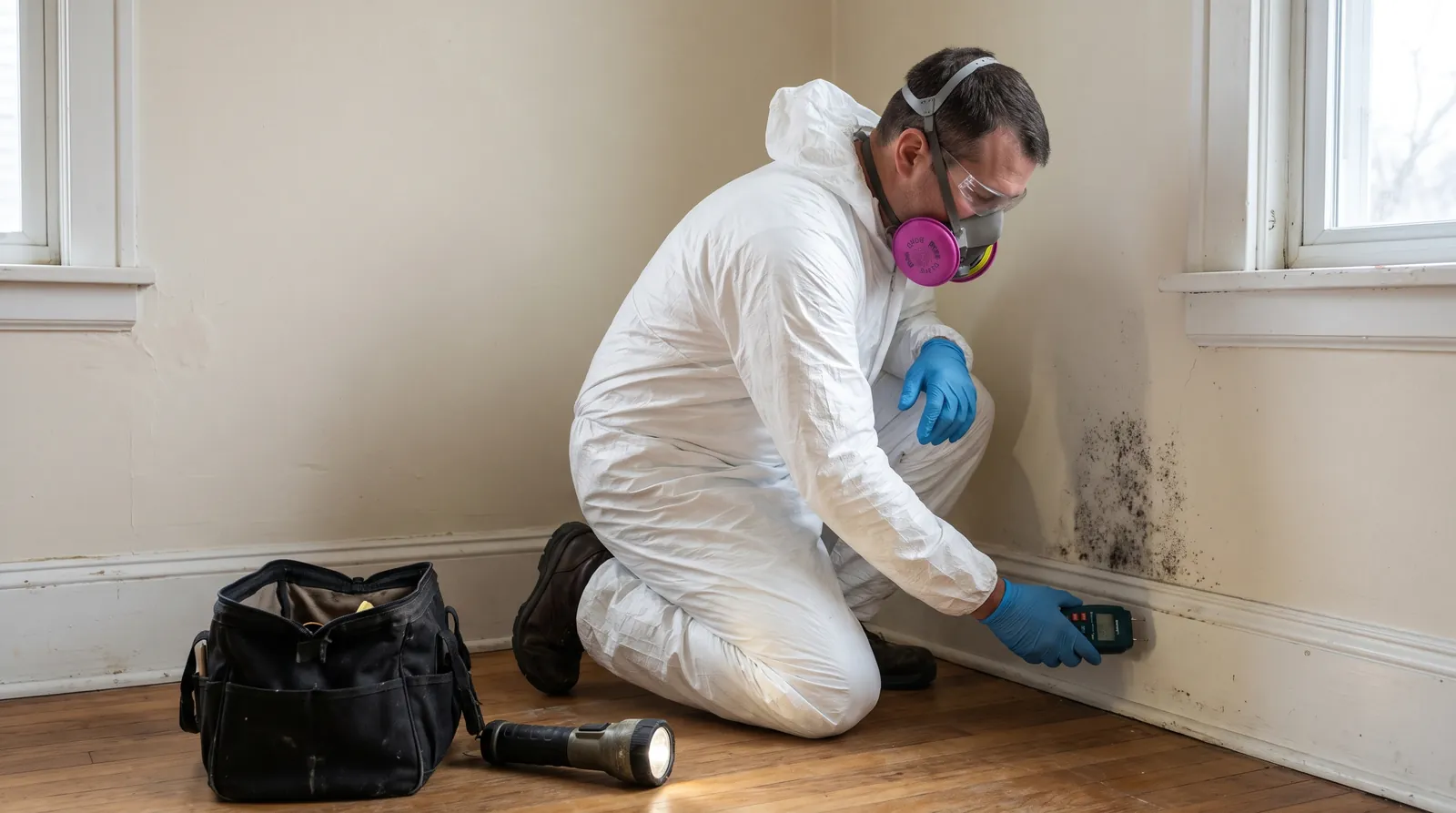
- Mold under about 10 square feet on a hard surface can often be cleaned by the homeowner, per EPA (Environmental Protection Agency) guidance.
- Larger areas, hidden growth or mold on drywall, carpet or insulation usually need a professional.
- Removal only holds if the moisture source is fixed.
Signs you need mold removal
Mold does not always show itself. These are the signs that usually lead to a mold removal call.
- Visible spots or fuzzy growthBlack, green, gray or white patches on walls, ceilings, grout or wood.
- A musty smellAn earthy odor that stays after cleaning often points to growth behind a surface.
- Stains after a leakBrown rings or discolored patches show that water reached the material.
- Peeling or bubbling paintMoisture trapped behind paint can lift it and feed mold underneath.
- Allergy-like symptoms indoorsSneezing, coughing or itchy eyes that ease when you leave the house.
What mold removal includes
A complete mold removal job has more steps than scrubbing a stain. This is what is covered.
- Moisture check. We find the water source and the wet materials.
- Containment. Plastic barriers keep spores from spreading to clean rooms.
- HEPA (High-Efficiency Particulate Air) filtration. Air scrubbers capture airborne spores during the work.
- Removal of growth. We clean surfaces and remove materials that cannot be saved.
- Drying. Fans and dehumidifiers bring the area back to a dry state.
- Final check. We look over the work area before it is closed up.
Mold removal in Jackson: what the climate does to a home
Jackson has long, warm summers and high humidity for much of the year. Air conditioners run for months. Cold supply ducts, cold walls and cool slabs collect moisture from the warm air around them.
That is why many Jackson mold calls do not start with a flood. They start with a slow, ordinary source of water that nobody saw.
- Roof and flashing leaks after heavy summer storms.
- Plumbing leaks inside walls, often in bathrooms and kitchens.
- Air conditioner drain lines that back up into a closet or ceiling.
- Crawl spaces and attics with little airflow.
Why mold grows in Jackson homes
Mold needs moisture, a food source and time. Jackson has long, humid summers, so moisture is often the missing piece that homes already supply.
- Roof leaks after heavy rain or storm damage.
- Plumbing leaks inside walls, under sinks and at water heaters.
- Air conditioning that runs but leaves rooms damp.
- Poor airflow in crawl spaces, attics and closets.
EPA (Environmental Protection Agency) guidance says mold can start growing within 24 to 48 hours after materials get wet. Fast drying matters.
Small job or larger job? How to tell
The EPA (Environmental Protection Agency) gives a simple starting point. If the mold covers less than about 10 square feet and sits on a hard, non-porous surface, many homeowners can clean it with detergent and water, then dry the area.
Porous materials are different. Drywall, ceiling tile, carpet, insulation and unfinished wood absorb moisture. Mold grows into them. Wiping the surface does not remove what is inside.
- Non-porous: tile, glass, metal, sealed concrete. Often cleaned.
- Semi-porous: finished wood, painted trim. Sometimes cleaned, sometimes removed.
- Porous: drywall, carpet, insulation, ceiling tile. Often removed when mold is present.
How our mold removal process works
Every home is different. The steps stay the same.
- AssessWe inspect the area, locate moisture and decide how far the mold has spread.
- ContainWe seal the work area with plastic sheeting and run filtered air.
- Remove and cleanWe remove affected materials and clean the surfaces that can stay.
- Dry and treatWe dry the structure and treat the surfaces we cleaned.
- VerifyWe check the area and explain what was done and what to watch.
Before we arrive
Helpful to do
- Find and stop any active leak if you can do it safely.
- Take photos of the mold and any water damage.
- Run the air conditioner and a dehumidifier to keep the room dry.
- Note when you first saw the problem and what happened before it.
Better to avoid
- Do not scrub or sand mold. That releases spores into the air.
- Do not paint or caulk over mold.
- Do not blow a fan directly at the mold.
- Do not remove large sections of drywall yourself.
What affects mold removal cost and timing
We do not quote a price before we see the problem. These are the main factors.
- The size of the affected area.
- The materials involved, such as drywall, wood or carpet.
- How hard the area is to reach.
- How much repair is needed after removal.
- Whether the moisture source is already fixed.
Call us with a few details. We will explain what the visit covers and what to expect.
When to call about mold right away
Call as soon as you can if you notice any of these.
- Mold covers more than about 10 square feet.
- Mold appeared after a flood, burst pipe or roof leak.
- The smell is strong and you cannot find the source.
- Someone in the home has asthma or a weak immune system.
Mold Removal FAQs for Jackson, MS
Can I remove mold myself?
Small spots under about 10 square feet on hard surfaces can often be cleaned by a homeowner, according to EPA guidance. Larger areas, hidden growth and mold on porous materials need a professional.
How long does mold removal take?
Small jobs can finish in a day. Larger jobs take several days because drying and repairs add time. We give you a time estimate after we see the area.
Will the mold come back after removal?
It can if moisture stays. Removal only works with a dry space, so we look for the source and tell you what to fix.
Is mold removal different from mold remediation?
The terms overlap. Remediation covers the full job: finding the cause, removal, drying and repair. Removal is the cleaning and material removal part.
What should I do first if I find mold?
Stop the water source if you can, keep the area dry and avoid disturbing the mold. Take photos, then call us with what you see. We will tell you whether it sounds like a small cleaning job or one that needs containment.
Does mold removal include fixing the leak?
We find and explain the source. A plumber or roofer usually fixes the leak itself. We coordinate the order of work so mold is not cleaned and then re-wetted.
Is mold removal safe for my family during the work?
The work area is sealed with plastic barriers and run with filtered air, so spores stay inside the work zone. For larger jobs we may suggest staying out of the affected rooms. We explain this when we see the home.
Need mold removal in Jackson, MS?
Call us. We will ask a few questions and schedule a visit.