

Attic mold removal
Attic Mold Removal in Jackson, MS
Call (769) 235-0088 for attic mold removal in Jackson, MS. We remove mold from roof decking, rafters and insulation and look for the leak or vent problem behind it.
Hot, humid attics grow mold on wood and insulation when air cannot move. Cleaning the growth is only half of the job.
Emergency availability for Jackson, MS and nearby cities
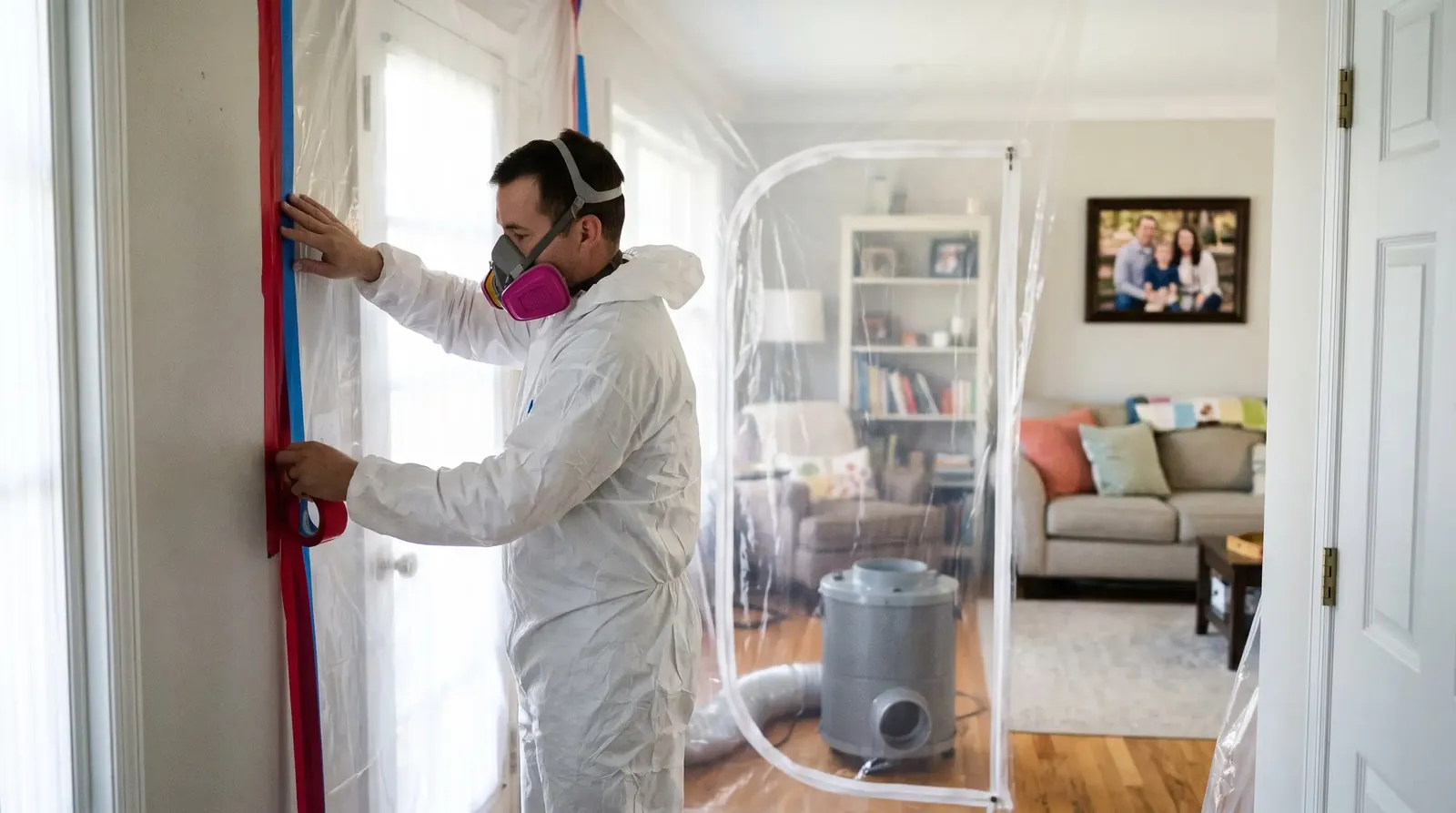
- Attic mold is usually a ventilation or roof-leak problem, not only a cleaning problem.
- Roof decking and framing are wood and can often be cleaned. Wet or moldy insulation is usually removed.
- Bathroom fans that vent into the attic are a common cause.
Signs of mold in an attic
Most people find attic mold by accident. These signs point to it.
- Dark patches on roof deckingBlack or gray spots on the underside of plywood or OSB decking.
- A musty smell upstairsAir from the attic can drift into the rooms below.
- Stained ceilings belowBrown spots on a top-floor ceiling can mean a wet attic above.
- Damp or flattened insulationInsulation that is wet or matted has lost its job and may hold mold.
- Rusty nails or frost marksCondensation on nails shows moisture forming in the attic.
Where mold hides in an attic
Attics have many surfaces and corners. We check each one.
Roof decking
Warm, moist air rises and condenses on the cooler underside of the roof.
Rafters and trusses
Wood framing near leaks and vents often grows mold first.
Insulation
Wet insulation traps moisture against the ceiling below.
Around vents and fans
A bathroom fan that ends in the attic pumps steam into it.
Near chimneys and flashing
Gaps at roof penetrations let rainwater in.
Under eaves
Blocked soffit vents stop airflow and trap humid air.
Attics in Jackson: heat, humidity and trapped air
A Jackson attic can get well over 100 degrees in summer. That heat sits on top of humid air. When warm, moist air reaches the cooler underside of the roof at night, water forms on the decking.
Repeat that for several months and the wood grows mold, often in a pattern along the north-facing slope or around vents.
- Soffit vents blocked by insulation or paint.
- Ridge or gable vents that do not move enough air.
- Duct leaks that push humid air into the attic.
- Roof flashing around chimneys and vent pipes.
Why attics grow mold in Jackson
A Jackson attic can heat up and hold moisture for months. Several problems make it worse.
- Roof leaks from storms, missing shingles or poor flashing.
- Bathroom or kitchen fans that vent into the attic.
- Blocked soffit or ridge vents that stop airflow.
- Leaking air conditioning ducts that release cool air into a hot space.
Fixing the vent or leak is part of the plan. Without it, new mold returns in a season or two.
Small spots or full-attic mold?
Attic wood is raw and porous, so mold grows into the surface grain. Light growth on solid framing can be cleaned. Heavy growth may need more work.
EPA (Environmental Protection Agency) guidance suggests professional help for areas over about 10 square feet. Attics are also hot, tight and dusty. That adds a safety reason to bring in a crew.
- Often cleaned: solid rafters and trusses with surface mold.
- Often removed: wet or moldy insulation.
- Often replaced: delaminated plywood or OSB decking.
How we remove attic mold
Attic work needs careful containment so spores do not drop into the house.
- Inspect the atticWe check decking, framing and insulation and find the moisture source.
- Seal and protectWe seal the attic hatch and set up air filtration.
- Remove wet insulationWe remove insulation that holds mold or moisture.
- Clean the woodWe clean decking and framing surfaces and dry them.
- Review preventionWe explain what to fix in ventilation, fans and roofing.
Before the attic visit
Helpful to do
- Clear the path to the attic hatch.
- Note stains on ceilings below the attic.
- Check that bathroom fans exhaust outside if you can see the duct.
- Tell us about any recent roof repair or storm.
Better to avoid
- Do not enter a hot attic in summer without protection.
- Do not step between joists.
- Do not add more insulation over moldy areas.
- Do not block soffit vents.
What affects attic mold removal cost and timing
Attic mold removal cost depends on the size of the attic and how much is affected.
- The attic square footage.
- How much insulation needs removal.
- Access: a small hatch makes work slower.
- Whether roof or ventilation repair is also needed.
A short description of what you see helps us give a clearer idea of the visit.
When to call about attic mold
Do not wait if:
- You see mold on large sections of decking.
- Water stains appear on ceilings below.
- The attic smells musty after rain.
- A storm damaged the roof.
Attic Mold Removal FAQs for Jackson, MS
Is attic mold dangerous?
Mold in an attic can spread spores into living space through gaps and vents. It also damages wood over time. Removal is the usual answer.
Can I clean attic mold myself?
Small, hard surface spots can sometimes be cleaned. Attics are hot, tight spaces, and insulation work stirs up spores. Larger areas should be handled by professionals.
Will new insulation be installed?
We remove affected insulation. Replacement can be arranged after the area is dry and the cause is fixed.
How do I prevent attic mold?
Keep vents clear, route bathroom fans outdoors and repair roof leaks fast.
Does attic mold mean my roof needs replacing?
Not always. It can come from ventilation or a bathroom fan. A roofer can tell you whether the roof itself is leaking. We tell you what we see.
Will you remove and replace insulation?
We remove insulation that holds mold or moisture. New insulation can be installed after the cause is fixed and the attic is dry.
Can attic mold affect rooms below?
Yes. Spores and odors can travel down through light fixtures, hatches and gaps around ducts.
Need attic mold removed in Jackson, MS?
Call us. We will schedule an attic visit and explain what we find.