

Basement mold removal
Basement Mold Removal in Jackson, MS
Call (769) 235-0088 for basement mold removal in Jackson, MS. We clean mold from walls and floors, remove damaged materials and track down the water source.
Basements are less common in Jackson than slab or crawl space homes, but some houses have them, along with lower-level rooms that behave the same way.
Emergency availability for Jackson, MS and nearby cities
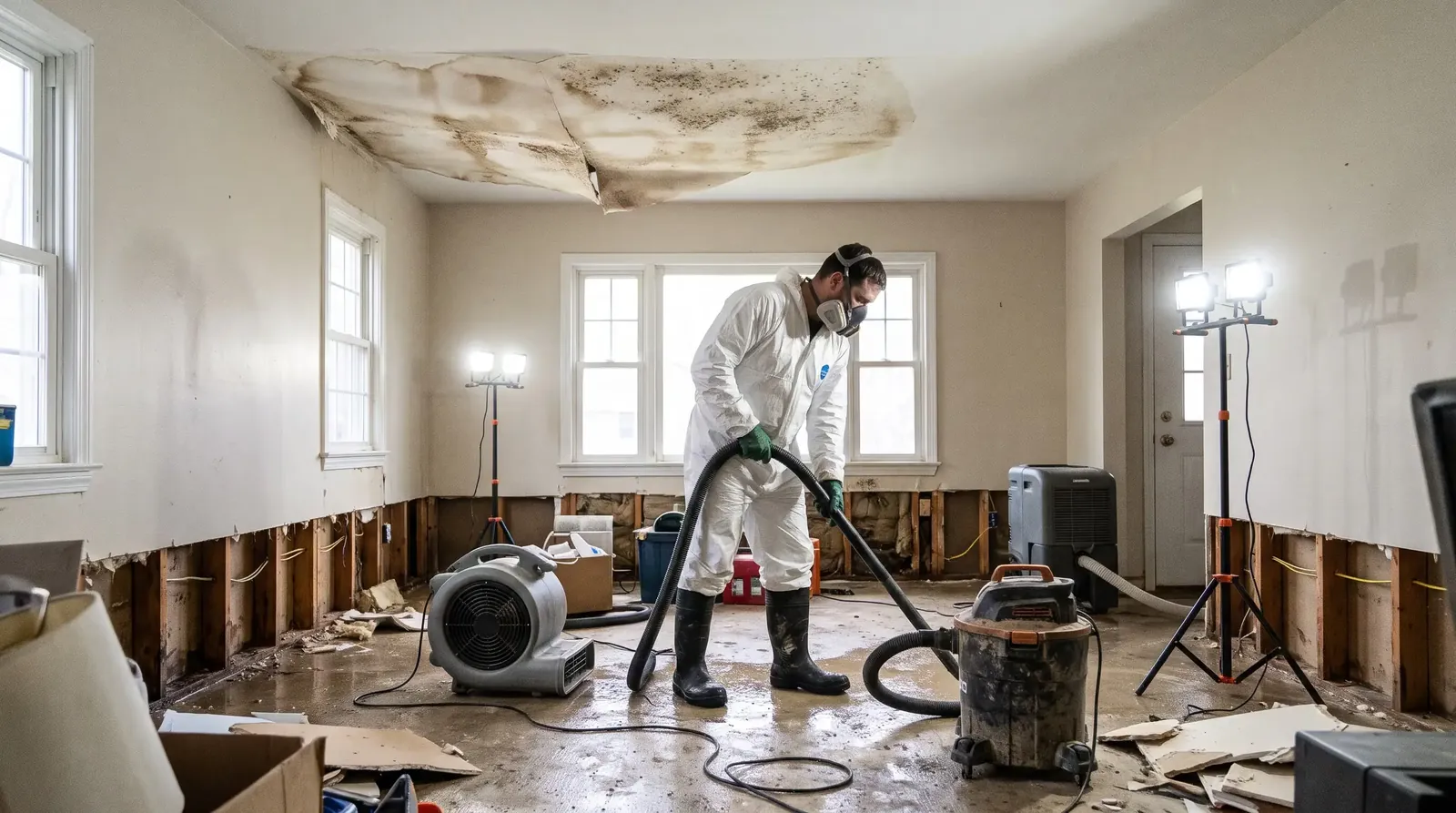
- Many Jackson homes have no basement, but those that do have lower-level moisture problems like any other.
- Concrete and masonry walls can be cleaned. Carpet, pad and drywall that stayed damp are usually removed.
- Water entry from outside is the first thing to check.
Signs of mold in a basement
Lower levels hold damp air. These signs point to mold.
- A musty smellThe smell stays after you air out the room.
- White powder on wallsMineral deposits show moisture coming through masonry. Mold often follows.
- Mold on stored itemsCardboard, fabric and paper pick up mold first.
- Damp floors or wallsDark patches or a clammy feel after rain.
- Peeling paint on lower wallsWater pushing through masonry lifts the paint.
Where mold hides in a basement
Basements have several spots where moisture and mold collect.
Foundation walls
Block and concrete absorb water and hold it against finished walls.
Wall framing and insulation
Wood studs against an outside wall stay damp.
Carpet and flooring
Padding holds water long after the surface looks dry.
Behind stored boxes
Boxes against a wall block airflow and trap moisture.
Near the water heater and pipes
Small leaks and condensation add up over time.
Floor drains and sump areas
Standing water and humidity feed growth nearby.
Lower levels in Jackson: clay soil and heavy rain
Central Mississippi has heavy rain and soils that hold water. Water that collects against a foundation looks for a way in.
Lower levels and daylight basements are less common here than in colder states, so owners can be unsure what normal looks like. A damp smell, white mineral marks or damp carpet are not normal.
- Gutters and downspouts that empty near the foundation.
- Soil sloping toward the house.
- Cracks in poured walls or gaps at slab joints.
- Window wells that fill with water.
Why basements grow mold in Jackson
Jackson gets heavy rain and the clay soil drains slowly. That puts pressure on lower levels.
- Rainwater that seeps through walls or floors.
- Gutters and grading that send water toward the foundation.
- Humid air that condenses on cool walls.
- Plumbing and appliance leaks.
A dehumidifier helps, but it does not replace fixing a leak.
What to clean and what to remove in a basement
Concrete, block and tile are non-porous or lightly porous. After drying, surface mold can often be cleaned off.
Finished materials are porous. Carpet, pad, drywall, insulation and cardboard boxes that stayed wet are usually removed. If the area is larger than about 10 square feet, EPA (Environmental Protection Agency) guidance points to professional help.
- Usually cleaned: concrete, block, tile, metal shelving.
- Often removed: carpet, pad, drywall, insulation.
- Often replaced: stored cardboard, paper and fabric.
How we remove basement mold
We start with moisture, not cleaning.
- Find the moisture pathWe check walls, floors, pipes and drainage for water entry.
- Contain the areaWe seal the work area and start air filtration.
- Remove soaked materialsWe remove carpet, padding and drywall that stayed wet.
- Clean hard surfacesWe clean masonry, framing and floors and dry them.
- Set up preventionWe explain drainage, dehumidifier and storage changes.
Before we visit the lower level
Helpful to do
- Move stored items away from the walls.
- Note where water shows up after rain.
- Check gutters and downspouts for blockage.
- Run a dehumidifier if the room is dry enough for the equipment.
Better to avoid
- Do not stack boxes against wet walls.
- Do not paint masonry that is still damp.
- Do not leave wet carpet in place.
- Do not ignore white powder on walls.
What affects basement mold removal cost and timing
Basement jobs vary a lot. The cost depends on moisture and materials.
- The size of the basement or lower level.
- Whether carpet or drywall was installed.
- How much water has entered.
- Whether drainage or waterproofing work is needed.
We will describe what to fix on the outside as well as the inside.
When to call about basement mold
Call soon if:
- Water enters after rain.
- Mold is on finished walls or carpet.
- The smell reaches rooms upstairs.
- You store items there that you do not want to lose.
Basement Mold Removal FAQs for Jackson, MS
Do Jackson homes have basements?
Fewer than in colder regions. Some homes have basements or lower levels, and the same moisture rules apply.
Can a dehumidifier stop basement mold?
It helps control humidity. It does not stop leaks or seepage.
Should I throw away damp stored items?
Cardboard and fabric that stayed wet are often better replaced. Hard items can usually be cleaned.
How do I keep mold out after cleanup?
Keep gutters clear, slope soil away from the house and keep humidity low.
Why does my lower level smell musty even with no visible mold?
Mold can grow behind finished walls or under carpet. A moisture check can find damp spots without opening everything.
Does waterproofing come with mold removal?
Not by itself. We clean the mold and describe the water path. A waterproofing or drainage contractor can handle the water entry.
How often should I check a lower level?
After heavy rain and at the start of summer. Look for damp spots, musty smell and condensation on pipes.
Need basement mold removed?
Call us. We will visit your Jackson, MS home and explain the next steps.